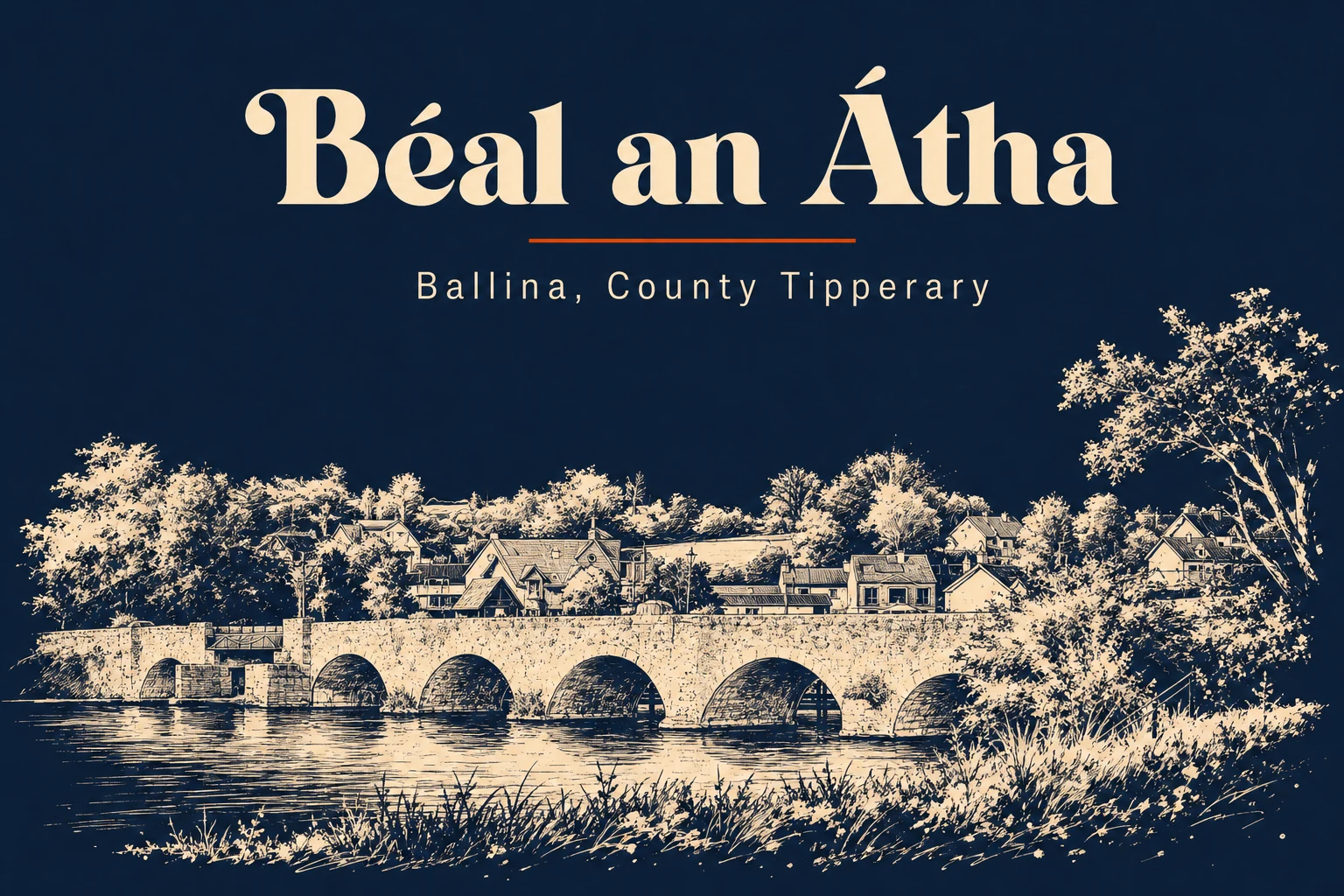
Béal an Átha · Co. Tipperary
Two counties, one bridge, one lake - and the lake runs everything.
Ballina is the Tipperary half of a twin town that works as one. Walk across the bridge - new since May 2025 and named Brian Boru - and you are in Clare, standing in front of a twelfth-century cathedral with a runic stone inside carved by a Viking called Thorgrim. The county boundary runs through the middle of the River Shannon. The towns do not acknowledge it much.
It is a lake town first. Lough Derg opens up immediately to the north and the whole economy of a summer afternoon organises itself around it - boats on the water, people eating riverside, the odd paddleboarder making slow progress against the current. Goosers on the Ballina bank has been feeding people from a spot beside the Shannon long enough that it has become a reason in itself to make the trip.
The hinterland matters too. Drive four and a half kilometres out the Portroe road and there is a trailhead for Tountinna - 459 metres of Arra Mountains, the Graves of the Leinstermen at the top, and Lough Derg laid out below you like something that took a very long time to arrange. It did. It is the widened Shannon, backed up behind the hydroelectric scheme at Ardnacrusha downstream.
Every July the twin towns run the Féile Brian Ború festival - music, water events, heritage tours, and a few days of the kind of organised community activity that feels less organised than it is. The rest of the year is quieter and slightly more itself.