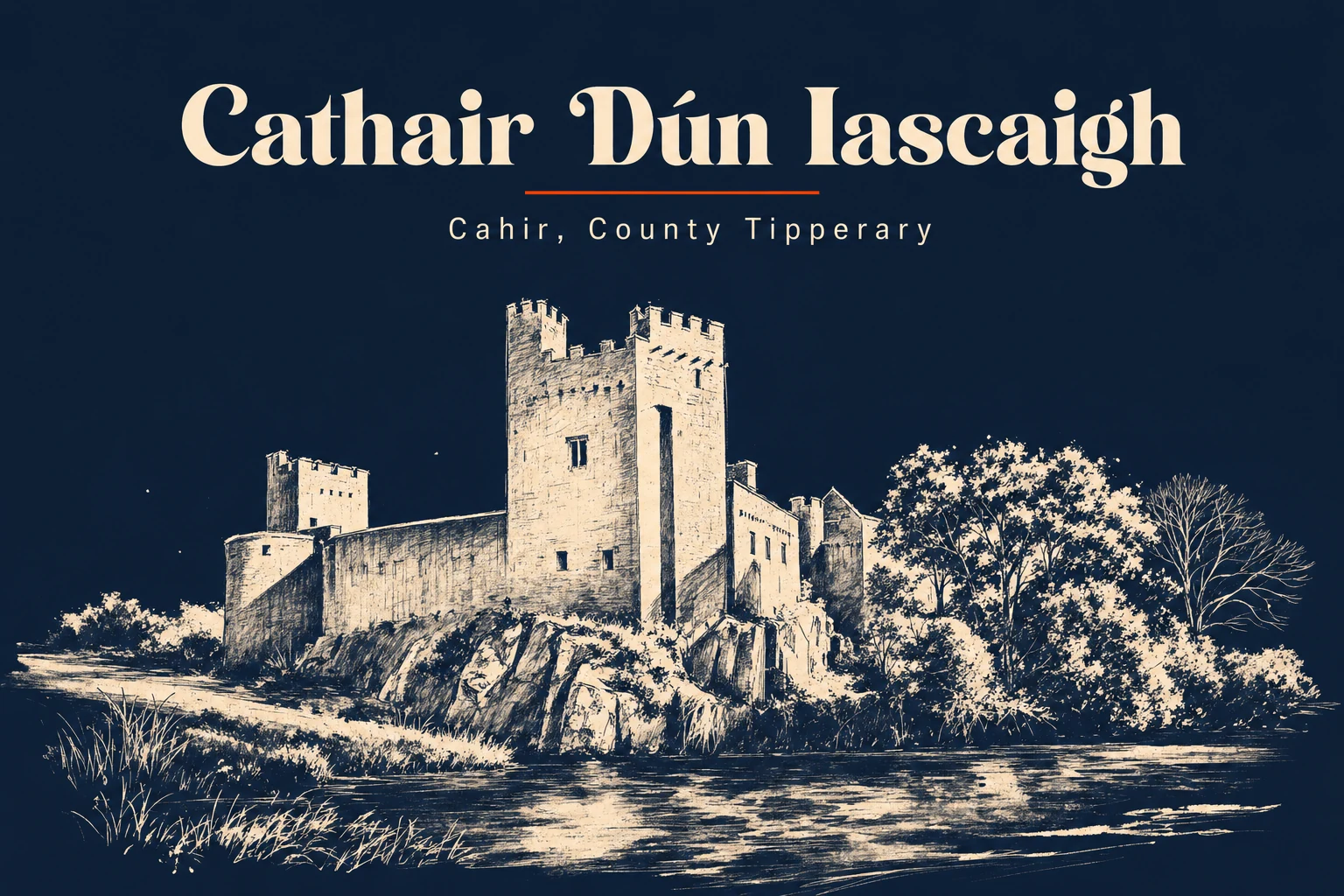
Cathair Dún Iascaigh · Co. Tipperary
One castle on an island, one cottage by a genius, one road through a mountain.
Cahir sits where the River Suir narrows and a rocky island stuck out of the water just wide enough for a castle. The Irish name - Cathair Dún Iascaigh - means something like 'the stone fort of the fishery', which tells you the order of priorities: defence first, the salmon run a close second. The Butlers, the great Norman dynasty who ran much of Munster, planted themselves here in 1375 and stayed, in one form or another, for nearly six hundred years.
The town that grew up around the castle is a working market town on the M8 between Dublin and Cork - a proper service stop, not a heritage set. People live here. There are schools and takeaways and a supermarket on the square. The castle is enormous and right in the middle of it all, which is either strange or perfectly ordinary depending on how long you've been here.
Two kilometres south on the Ardfinnan Road, a thatched cottage sits in riverbank woodland and is one of the most architecturally odd buildings in Ireland. John Nash - the man who did Buckingham Palace and Regent Street in London - designed it around 1810 as a retreat for the Earl of Glengall. The interior has Parisian wallpapers that were among the first commercially produced in France. It was a place for parties. It is the opposite of what you expect from this part of Tipperary.
Cahir's other card is its position as the gateway to the Vee. Drive south from town, go through Clogheen, and the R668 rises into the Knockmealdown Mountains and bends in a sharp V before dropping into Lismore in County Waterford. It is one of the best mountain drives in the south of Ireland and nobody crowds it. The Galtee Mountains sit to the west and on a clear day the view is serious. Most people drive it once and then come back for it.