Fifteen thousand pilgrims and an alarm clock
The Miracles of 1920
On 16 August 1920, a Royal Irish Constabulary inspector was shot dead in Templemore by the IRA. That night, British forces carried out reprisals. Into this atmosphere of violence, a sixteen-year-old farm labourer named Jimmy Walsh announced he had received visions of Our Lady and that religious statues in his cottage and in Dwan's shop on the main street were weeping tears of blood. A holy well appeared in his bedroom floor. The story ran in every newspaper. Within days, up to fifteen thousand people a day were coming to Templemore — the newspapers called it Pilgrimville. Reported cures brought more. The IRA, concerned that a mass of civilians made ambushes impossible and Collins, suspicious of the whole business, had a statue sent to him in Dublin. He smashed it open. Inside: an alarm clock, fountain pen inserts, and sheep's blood — a mechanism that expelled blood at a set time. Walsh was brought to Dublin and questioned. Collins concluded he was not to be trusted. Labelled a potential spy, Walsh's life in Ireland effectively ended. He emigrated to Australia in 1923, changed his name, and spent decades trying and failing to enter religious orders. The statues stopped bleeding.
Built by the British, inherited by the Gardaí
McCan Barracks
Sir John Carden donated the land in 1809 and the British Army built Richmond Barracks on it — one of the larger garrison facilities in Munster, with accommodation for nearly 800 men, a hospital, a prison, a church, and stabling. It served British military purposes for over a century, passing through various names. After Irish independence it became the temporary home of various state tenants before sitting largely empty. On 21 February 1964, it was officially opened as the national training college for An Garda Síochána. The first recruits moved in that year. Every Garda officer who has served since has passed through Templemore first.
The mountain with a grudge against the plain
The Devil's Bit
Bearnán Éile — anglicised as Devil's Bit — rises to 480 metres northwest of town. The gap at its summit, a limestone notch visible from the road below, is the origin of the name. The story goes that the devil, flying over Tipperary, bit a chunk out of the hill in frustration or rage, then spat it south. The fragment landed thirty kilometres away and became the Rock of Cashel. The Rock of Cashel is real. The gap is real. The nine counties visible from the top on a clear day are, according to local tradition: Tipperary, Clare, Cork, Galway, Kilkenny, Laois, Limerick, Offaly, and Waterford. A cross stands at the summit. Pilgrims still climb it.
The big church, the ascendancy family, the burning
Templemore Abbey and the Cardens
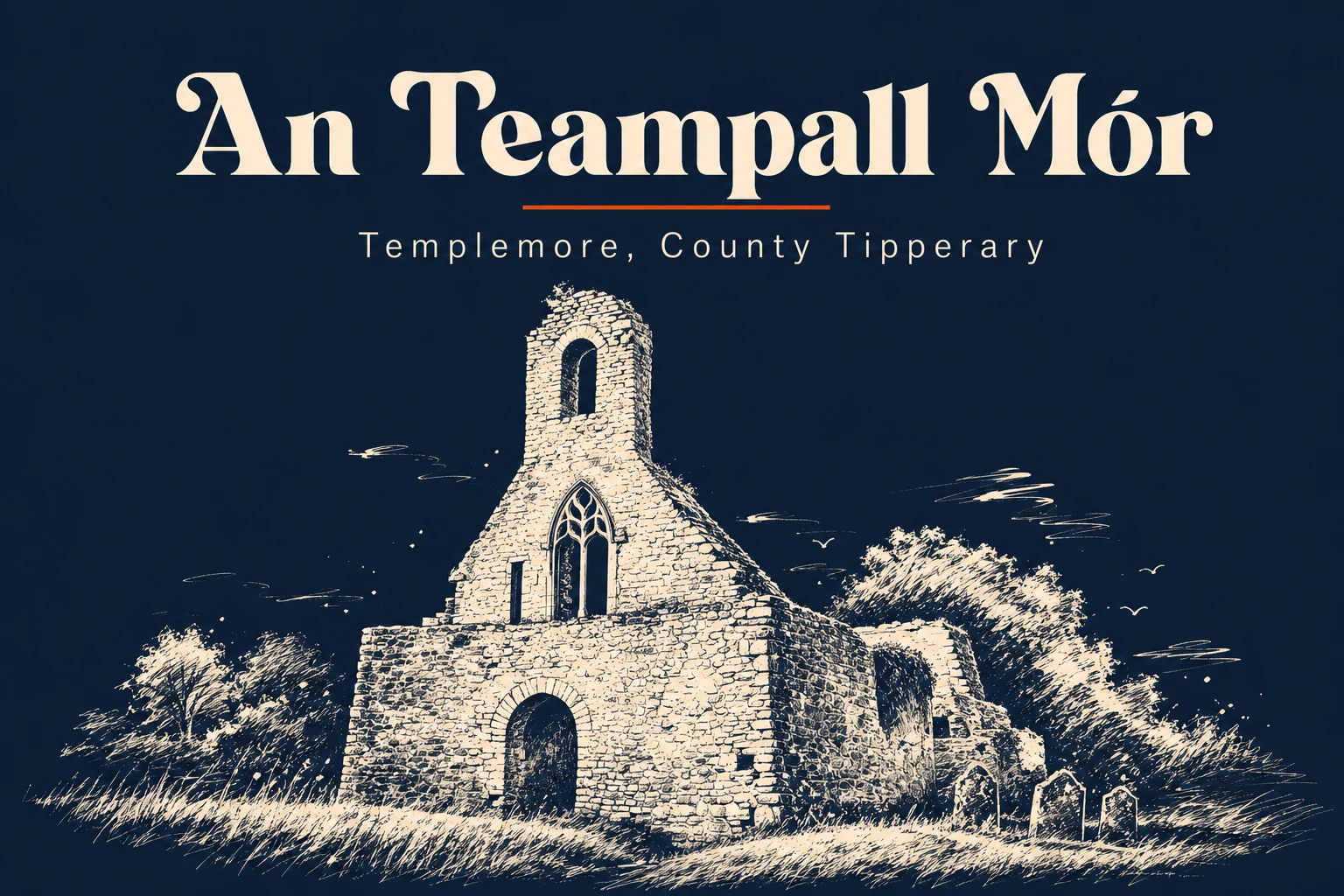
The name Templemore — Teampall Mór, the big church — refers to a medieval abbey, possibly founded by the Knights Templar, whose ruins still sit in the Town Park north of town. The Carden family, who effectively built the modern town, built their house — also called Templemore Abbey — in the demesne around the ruins. That neo-Gothic mansion was burned in 1921 on orders attributed to Michael Collins, after the Auxiliaries vacated it. The demesne passed to the Urban District Council after independence and became the public park it is today. Walk through it on a quiet morning and you can find the medieval stonework in the grass.