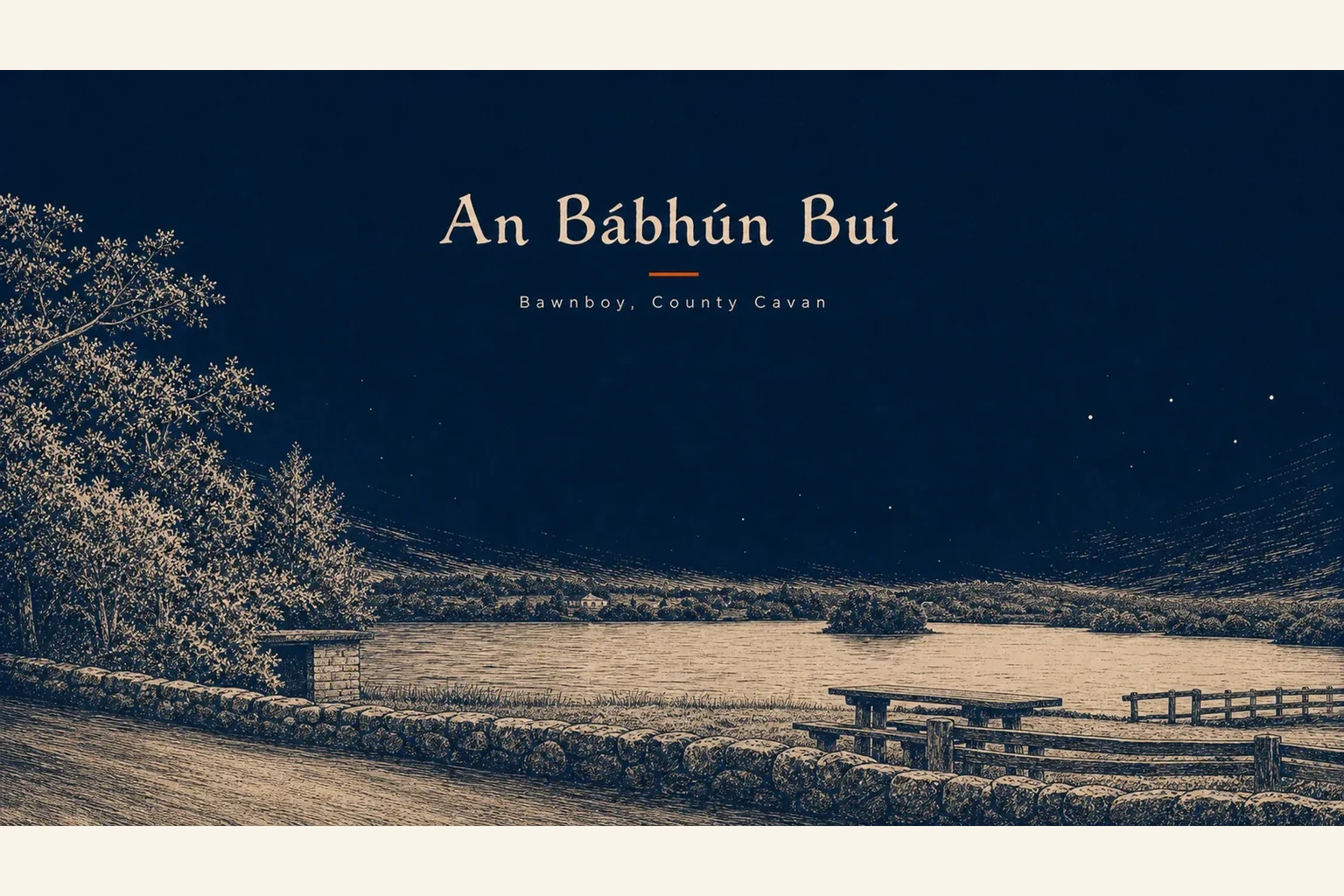
An Bábhún Buí · Co. Cavan
A Plantation bawn gave the village its name. The bawn is long gone.
Bawnboy is a small crossroads in the north-west of Cavan, sitting on the R200 between Ballyconnell to the south-east and Swanlinbar to the north-west. The Shannon-Erne Waterway corridor runs through the wider area. The village itself is modest: a pub, a church, a scattering of houses, the kind of settlement that appears on maps at a scale where most things do not.
The Irish name, An Bábhún Buí - the yellow bawn - places the village in the history of the Plantation of Ulster, that early-17th-century project of settling loyal Protestant families on land confiscated from Gaelic Irish lords. The bawn was the first thing settlers built: a high-walled stone enclosure where livestock and people could shelter if attacked. They were functional and they were also a statement about who owned the ground. The yellow bawn that named this place is gone, absorbed into later buildings or simply dismantled stone by stone over four centuries.
The Famine reached this ground hard. Bawnboy had a workhouse - one of those grim infrastructure projects of the 1840s designed to provide relief to the destitute on terms deliberately harsh enough to deter all but the truly desperate. People walked here from the surrounding townlands. The building later passed through other uses. The land around the village carries that history the way this part of Cavan carries everything: quietly, without making a scene of it.
The River Woodford runs nearby, draining through the drumlin country toward the Shannon-Erne system. Lough Bawn lies to the south. The landscape is the thing here - not a single dramatic peak or a famous body of water, but the slow accumulation of small hills, wet fields, and grey lake water that defines the interior of the island when no one is trying to sell it to you.