← All Clare tours via partner · From €659 · 5 days 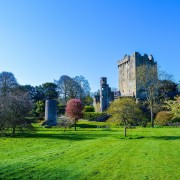
5-Day Tour of West Ireland: Blarney Stone & Cliffs of Moher
Free cancellation Booked securely via partner
Check availability & prices →
From €659 per person
Five days is the right amount of time to actually feel the west of Ireland rather than just pass through it. This guided tour takes you from Blarney Castle in Cork all the way up to Connemara, with the Ring of Kerry, the Cliffs of Moher, the Aran Islands, and Kylemore Abbey along the way.
Day 1 - Blarney Castle and Killarney
You’ll visit Blarney Castle and, if you’re so inclined, kiss the Blarney Stone for the Gift of Gab. From there, the tour takes in the Queenstown Story at Cobh before a train journey to Killarney, where you’ll check into a bed and breakfast for the first of your two nights in the area.
Day 2 - Ring of Kerry and Dingle Bay
Today’s the big drive. The Ring of Kerry route follows the Dingle Peninsula and bay through some of Ireland’s most celebrated scenery - the Macgillicuddy Reeks, Carrantuohill (Ireland’s highest mountain), Ladies’ View, and the world-famous Lakes of Killarney. Breakfast included.
Day 3 - Cliffs of Moher and Galway Bay
You head north to Limerick and then out to the Atlantic coast for the Cliffs of Moher. After that, a visit to Bunratty Castle before arriving at Galway Bay. Breakfast included.
Day 4 - Inis Mór and Dún Aonghasa
Take the ferry to Inis Mór, the largest of the Aran Islands. After lunch in Kilronan, you’ll tour the ancient stone fort of Dún Aonghasa - perched dramatically on the edge of sharp cliffs above the sea. Breakfast included.
Day 5 - Kylemore Abbey and return to Dublin
Your final day takes you through Connemara, a coastline of peninsulas and Atlantic light, to Kylemore Abbey. Home to a community of Benedictine nuns since 1920, it’s the oldest Benedictine abbey in Ireland. From there, you head back to Dublin. Breakfast included.
Blarney opens early - use it. The queue for the Stone can hit an hour by mid-morning in summer. The Blarney Castle grounds around Rock Close are worth as much of your time as the stone itself - the Wishing Steps, the Witch’s Kitchen, and the Victorian rock garden dressed up with druidic names are quieter than the castle battlements and genuinely atmospheric. The word “blarney” itself has a better story than the stone: Elizabeth I complained that Cormac MacCarthy sent “blarney” - smooth flattery instead of obedience - and the word entered English four hundred years before the tourist industry arrived.
Killarney is your base for two nights, and the park starts at the end of the high street. Knockreer, ten minutes’ walk from the town centre through the demesne gates beside the cathedral, is almost empty most mornings and gives you the postcard view of the lakes with Carrauntoohil across the water. The town itself is honest about being a tourist town - the pubs on Plunkett Street (Courtney’s Bar, Tatler Jack) are where the locals actually go, and they’re a ten-minute walk from the coach-group places on High Street.
For Day 4, lunch in Kilronan happens fast. The ferry schedule and Dún Aonghasa mean you’re working against the clock. Tigh Joe Mac’s does fish landed that morning; Café Ósta near the pier is quicker if you need to keep moving. Dún Aonghasa is a 3km return walk from the village up a stone path - the cliff edge is real and sheer, 100 metres above the Atlantic. Don’t rush it, but do know that the fort closes when the OPW says it does.
Day 3 at Bunratty is worth more than a passing stop if the timing allows. The Folk Park around the castle is thirty acres of reconstructed cottages, a working forge, and a 19th-century street - all moved stone by stone from sites that were about to disappear. Budget two to three hours rather than one. Durty Nelly’s, the pub at the foot of the castle, claims to date from 1620 and is fine for a pint before you get back on the road.