← All Clare tours via partner · From €89 · 12 hours 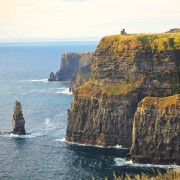
Cliffs of Moher and Galway Tour in Italian or Spanish
Free cancellation 2,449 traveller reviews Booked securely via partner
Check availability & prices →
From €89 per person
Ireland’s west coast is one of those places that photographs simply cannot do justice. This full-day tour from Dublin takes you across the country to the Cliffs of Moher and Galway, with an Italian or Spanish speaking guide making the journey accessible and entertaining for non-English speakers. It’s a long day at 12 hours, but every stretch of road brings something worth seeing.
Galway is your first major stop, and the city delivers exactly what you hope for from an Irish town. Cobbled side streets full of buskers and craft shops, brightly painted pubs spilling live music onto the pavement, and a riverside walk that leads to a striking cathedral. You get 1.5 hours of free time here, which is enough to wander, grab lunch, and soak up the atmosphere before heading south towards the coast.
The Burren is unlike anywhere else in Ireland - a vast expanse of cracked limestone that looks almost lunar, yet hides wildflowers in its crevices and ancient dolmens among its rocks. Your guide provides commentary as the coach crosses this strange terrain on the way to the Cliffs of Moher. Standing 220 metres above the Atlantic, the cliffs are genuinely awe-inspiring. You have two full hours to walk the path along the cliff edge, watch puffins and other seabirds wheeling below, and visit the exhibition at the visitor centre.
You have 1.5 hours of free time in Galway, which is enough to do it properly if you know where to go. Skip the main drag on Shop Street and turn left at the first laneway - that’s where the actual city lives. The medieval core is a grid of streets narrow enough that you can hear two different sessions from the same corner at night, though you’ll be here at lunchtime. For food, Ard Bia at Nimmo on Quay Street does a locally-led lunch menu that changes with the market, and the Gourmet Tart Company nearby is the faster option if you want to eat and keep walking. Both are well-known and both are worth it.
Galway is an Irish-speaking city at its edges - you’ll see shop signs in Irish and bilingual street names throughout the medieval core. The city sits on the edge of Connemara, which is Gaeltacht territory, and that connection runs through the culture even in the tourist-facing parts. The Claddagh neighbourhood near the river is where the famous Claddagh ring originated - not a tourist invention but a real symbol from a real fishing village that the city eventually absorbed. It’s a ten-minute walk from the centre and worth the detour if time allows.
The drive south from Galway follows the bay coast road south toward Clare. The route passes Kinvara, where Dunguaire Castle - a 16th-century tower house built around 1520 - sits right on a stone promontory over the water. The Burren limestone begins to emerge from the hillsides before you reach the county border. Once into Clare, the dolmens (ancient stone portal tombs) scattered among the rock are 5,000 years old and visible from the road; your guide will point them out with commentary.
If you’re standing at the Cliffs wondering about the walk south toward Hag’s Head, the southern cliff path starts above the village of Liscannor - a working pier village about 8km below the visitor centre where walkers who do the full route come in from the coast road. Doolin sits 6km north of the cliffs in the other direction - the trad music village where Gus O’Connor’s has been running sessions since 1832, and from where ferries run to the Aran Islands. You won’t be stopping at either on this tour, but knowing they’re there is useful if you plan to come back independently.
At the Cliffs of Moher, two hours is enough time to walk the cliff path in both directions from the visitor centre and still have time inside the exhibition. The cliffs are 220 metres high at their tallest point and the Atlantic wind can be strong regardless of the weather inland - the jacket warning is not an exaggeration. Puffins nest in the cliff face from April to August and are visible from the viewing platforms during those months.