Irish Confederate Wars
The Shrule massacre, 1642
In 1642, during the Irish Confederate Wars, a massacre occurred at Shrule. Protestant settlers were killed at the ford on the Black River. The event is documented in historical records. It was not large in the scale of the war — it was a specific, local violence — but it was real. Men, women, and possibly children died at that water crossing. The reasons were religious and political: the Confederates were Catholic and Irish; the settlers were Protestant and English or Anglo-Irish. The violence came from both sides in this conflict, but Shrule is remembered for this killing. The ford still runs. The water still flows over the same stones. The massacre is part of the place.
Medieval ruins
Shrule Castle
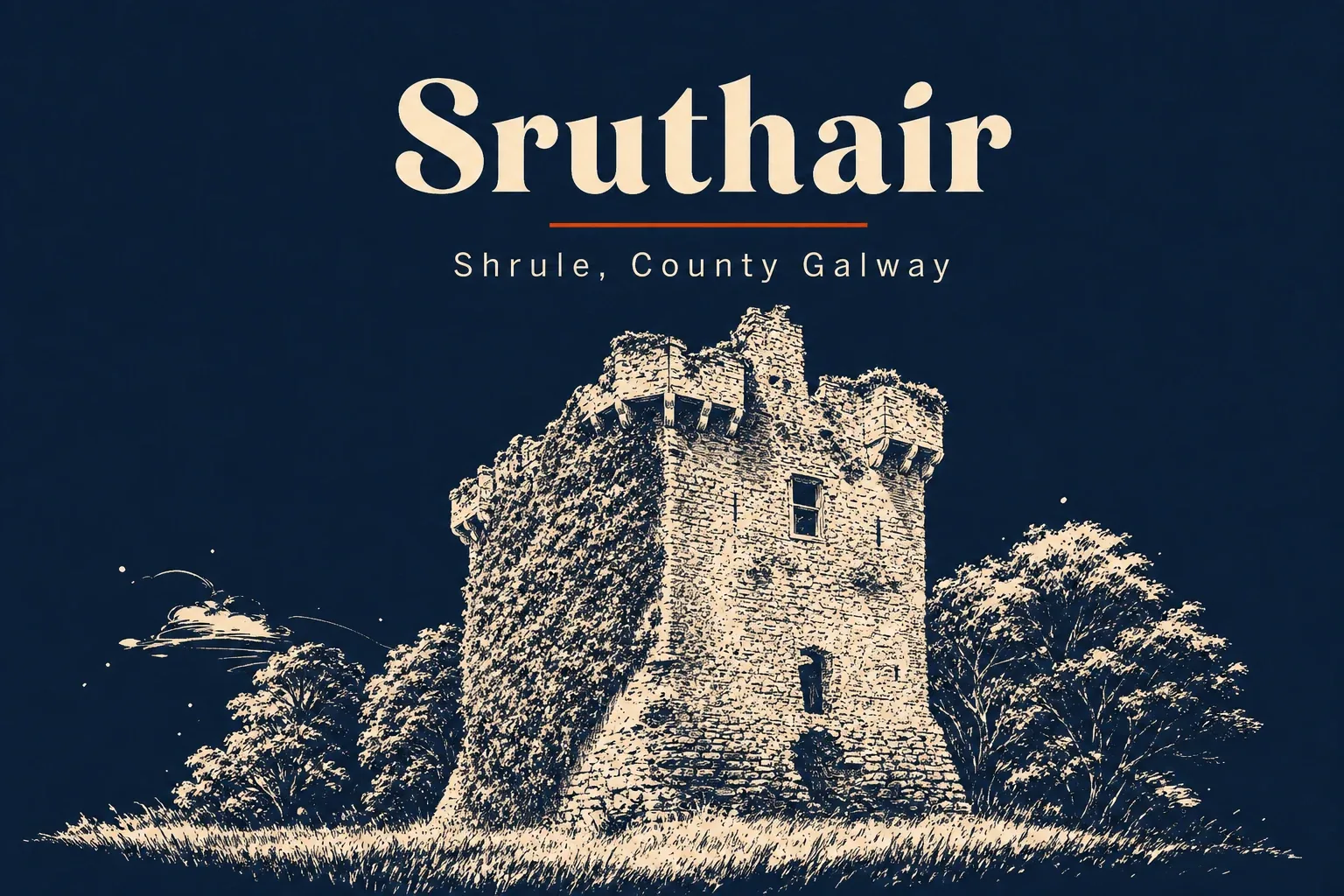
Shrule Castle stands ruined on the bank of the Black River. Its origins are medieval. The structure is standing but broken. It has been slowly returning to the earth for centuries. The castle was built by Norman and Anglo-Irish lords as a stronghold in the landscape. By the 17th century, it was already losing its power to newer fortifications and to the plain fact of Irish resistance. The 1642 massacre happened below it — the castle could not stop it. The ruins remain, slowly broken by weather and time, a reminder that fortifications do not last and that power, in the end, is temporary.
Crossing the Black River
The ford and the bridge
The Black River at Shrule was once crossed by a ford — a shallow place where horsemen and cattle could pass. This ford was where the 1642 killing happened. A bridge was later built to replace the ford, a more permanent crossing. The bridge still stands. You can walk or drive across it now. The ford is still there beneath the water. Both are real: the old way and the new way exist in the same place. The bridge is functional, modern concrete and stone. The ford is memory and water. When you cross at Shrule, you are crossing where those settlers died. The river does not remember, but we do.