← All Meath tours via partner · From €4 · 8 hours 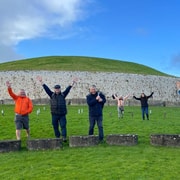
From Dublin: Newgrange and Boyne Valley Private Day Trip
Free cancellation Booked securely via partner
Check availability & prices →
From €4 per person
The Boyne Valley is one of the most historically significant stretches of land in Ireland, and most of it is less than an hour from Dublin. This private tour for up to 6 people covers four major heritage sites in a single day, with your own driver-guide taking care of the route and the stories.
Newgrange is the centrepiece - a Neolithic passage tomb built around 3200 BC, which makes it about 600 years older than Stonehenge. It’s aligned with the rising sun at the winter solstice, so that for a few minutes each year, light floods the entire passage. Entry to Newgrange is included. From there, you head to the Hill of Slane, where St Patrick lit his Paschal Fire on Easter eve in 433 AD in direct defiance of the High King’s orders - a famous moment in Irish history and a commanding spot with views across the valley.
Monasterboice is one of Ireland’s finest early Christian sites, home to the High Cross of Muiredach, which is covered in intricately carved biblical scenes and is considered the best example of a Celtic high cross in the country. The day finishes at Mellifont Abbey, the first Cistercian monastery in Ireland, founded in the 12th century.
Hotel pickup and drop-off from Dublin is included. Lunch is at your own expense. Duration approximately 8 hours.
Slane is the village you’ll pass through on the way to or from the Hill of Slane. It’s a notable spot in its own right: four Georgian houses arranged symmetrically at a crossroads, a castle with a forty-year history of rock concerts (U2, Rolling Stones, Bob Dylan, Springsteen), and the old castle stable yards now housing the Slane Whiskey Distillery. If your guide builds in time here, the distillery runs tours and tastings - book ahead as walk-ins aren’t guaranteed. The Conyngham Arms Hotel on the main street is the practical lunch stop in the village if your schedule allows.
The Hill of Slane itself is a 3km return walk from the village, roughly an hour. The path leads to the ruined church and friary at the top, with wide views across the Boyne Valley. Each year on Holy Saturday, the local parish priest lights a fire from the hilltop to echo the legend of Patrick’s defiance - a tradition that’s been running for a long time.
Newgrange entry is timed and fills up well in advance, especially in summer. Your guide handles this, but if you’re booking at short notice, mention your preferred entry time when confirming the tour. The winter solstice lottery for the illuminated passage is a completely separate process run by the Heritage Service - your guide can explain how it works.
The four sites span roughly 30km of the Boyne Valley, so the pace is steady rather than rushed. Comfortable shoes matter: Newgrange involves steps inside the passage, the Hill of Slane has uneven ground at the top, and Monasterboice’s paths can be muddy after rain.
Monasterboice and Mellifont are both within a few kilometres of Collon. If your driver routes through the village, it’s worth knowing: Collon is a planned Georgian estate village built by Speaker Foster, last Speaker of the Irish House of Commons before the Act of Union. Old Mellifont - the ruined Cistercian abbey founded in 1142 - is four kilometres south of the village on the R168, and Monasterboice is eight kilometres south-east. The lavabo at Old Mellifont, a 13th-century octagonal stone basin where the monks washed before meals, is the most photographed ruin in the Boyne Valley after Newgrange itself. New Mellifont, a working Cistercian abbey re-established in 1938, is at the edge of the village. If you want to stop for a pint near the end of the day, Stanley’s Bar on Collon’s Main Street has been pouring them since 1896.