← All Clare tours via partner · From €199 · 2 days 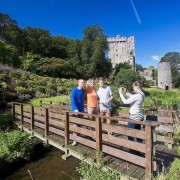
Cliffs of Moher and Blarney 2-Day Tour from Dublin
Free cancellation 82 traveller reviews Booked securely via partner
Check availability & prices →
From €199 per person
If you want to see the dramatic southwest of Ireland without the stress of driving unfamiliar roads, this two-day trip from Dublin covers a lot of ground - and does it well. You’ll take in the Rock of Cashel, Blarney Castle, Cork city, the Burren, and the Cliffs of Moher, with an overnight stay in Cork built in.
The coach departs Dublin at 08:00, heading south through scenic countryside toward Munster. Your first stop is the Rock of Cashel in County Tipperary - one of the most evocative sites in Ireland. A cluster of medieval ruins sits high on a limestone outcrop: Celtic crosses, a round tower, a Romanesque chapel, and the Gothic cathedral that replaced it. The Rock was the traditional seat of the Kings of Munster for centuries before they handed it to the Catholic Church around 1,100 years ago. It’s considered one of the finest examples of medieval architecture in Europe, and worth every minute you spend there.
From Cashel, the tour continues to Cork, Ireland’s second city. You’ll have time to visit the English Market - a covered food market that has been trading since 1788, with local produce, artisan cheeses, meats, and everything good about Irish food culture. It’s a fine spot to stop for lunch. After Cork city, you head to the small town of Blarney for the afternoon. Blarney Castle is a 15th-century medieval stronghold, and you can kiss the famous Blarney Stone (optional) to claim the gift of eloquence. The castle itself is worth exploring beyond the Stone - dungeons, hidden bedrooms, caves and winding stairs through the old keep. The evening is spent overnight in Cork.
Day two heads north and west through the Golden Vale, some of the most productive farmland in Ireland. You stop in Limerick to see King John’s Castle on the banks of the River Shannon - a good photo stop before continuing west into County Clare.
The Atlantic coast opens up as you reach Clare, with sandy beaches where you might spot dolphins offshore. The road then crosses the Burren, one of Europe’s most unusual landscapes - a vast pavement of cracked limestone where Alpine, Arctic, and Mediterranean plants grow side by side. Your guide explains the geology and points out the ancient dolmens and ring forts scattered through the rock.
The Cliffs of Moher are the highlight of day two. Rising over 200 metres above the Atlantic, the views on a clear day stretch to the Aran Islands and beyond. You’ll have time to walk the cliff paths and take in the scale of the place before the return journey to Dublin.
At Cashel, the Rock of Cashel rises 60 metres above the Tipperary plain and is visible from the M8 motorway for miles in each direction. The walking approach from the car park takes five minutes and delivers you to the outer walls in the right orientation - that first view of the limestone outcrop and the clustered medieval buildings is much better on foot than by car. Allow time inside for Cormac’s Chapel, consecrated in 1134: it holds the only surviving Romanesque frescoes in Ireland, discovered under centuries of limewash in the 1980s, and the carved tympanum above the door has no parallel on the island. This is the centrepiece of the complex, not the cathedral.
The Rock opens at 9am. Tour coaches often time for midday arrival, and the site is not large. If your itinerary gives you any flexibility on timing, earlier is significantly better. Cashel town itself is worth ten minutes before boarding the coach: Hore Abbey, a 13th-century Cistercian ruin, sits in a field below the Rock, free to enter, and usually empty.
At Blarney, the Stone itself is 83 feet up in the battlements and requires lying backwards over a gap - a guide holds your waist, it takes about thirty seconds, and the queue can be twenty minutes or two hours depending on the season. The castle is worth exploring beyond the Stone: dungeons, hidden bedrooms, narrow stairs through the 1446 tower. More importantly, the Rock Close gardens behind the castle are quieter than the queue and genuinely good - a Victorian rock garden with standing stones, a sacred well, and the Wishing Steps. They’re often overlooked by people focused on the Stone.
The word “blarney” entered English from this place specifically: Elizabeth I complained that the MacCarthy lord sent “blarney” - smooth talk and excuses - instead of obedience. A four-hundred-year-old royal frustration did what no marketing campaign could.
The Cliffs of Moher visitor centre is at the centre of the cliff range. The cliffs above Liscannor to the south - the Hag’s Head end - run six kilometres with no turnstile and no car park fee, just open headland and the same 200-metre drop into the Atlantic. If you’re ever coming back independently, start from Liscannor: park north of the village, walk to Hag’s Head and Moher Tower (1808), and you’ll see the visitor centre crowd at the far end of your day. Vaughan’s Anchor Inn on the main street has been a Michelin-recommended seafood kitchen since the Vaughan family took it over in 1979.
The road across the Burren on day two passes through the territory of Ballyvaughan and Doolin. The Burren is 250 square kilometres of cracked limestone where Alpine, Arctic and Mediterranean plants grow side by side - Cromwell’s surveyor said it had not enough wood to hang a man, water to drown him, nor earth to bury him. He missed the point. Ballyvaughan sits at the foot of Corkscrew Hill, a famine-relief road built in the 1840s that zigzags up the limestone face with views across Galway Bay at the top. Doolin, three kilometres from the cliffs, is where the Cliffs of Moher coastal walk ends if you do it from the north - four pubs, Gus O’Connor’s running sessions since 1832, and a ferry pier for the Aran Islands.
The Cliffs of Moher can be very windy even on still days in Cork and Tipperary - the Atlantic exposure is significant. Pack a proper jacket regardless of the forecast, and wear shoes with grip for the cliff paths.