← All Clare tours via partner · From €8 · 1 day 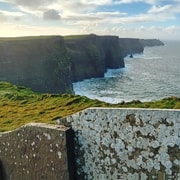
From Dublin: Private Cliffs of Moher Tour
Free cancellation Booked securely via partner
Check availability & prices →
From €8 per person
Your guide on this trip is licensed, insured, and genuinely interested in Irish history and local culture - the kind of person who makes the journey as good as the destination. The route covers the Burren and Cliffs of Moher on the Wild Atlantic Way, with the itinerary flexible enough to suit your group’s pace and interests.
The Cliffs of Moher need no introduction, rising sharply from the Atlantic along Ireland’s west coast. Together with the limestone pavement of the Burren stretching inland, they form a UNESCO Geopark - two dramatically different landscapes sitting side by side. Doolin, a small Clare village well known for traditional music, is the lunch stop. On the way back, there’s a photo stop at Dunguaire Castle, a 16th-century tower house on the shore of Galway Bay in the village of Kinvara.
The price covers guiding and driving. Entry to the Cliffs of Moher is approximately €10, and lunch in Doolin runs roughly €15-20. The tour departs from Dublin.
Doolin is made up of three hamlets - Fisher Street (where Gus O’Connor’s pub has been pouring since 1832), the Harbour at the bottom of the hill, and Roadford up at the crossroads. When the tour pulls in for lunch, you’re well placed to eat at Doolin: Gus O’Connor’s kitchen does a chowder worth sitting down for, and if you prefer something quieter, Doolin Cafe on the main road does soup and brown bread without the lunchtime crush.
If your guide has flexibility in the day, the Cliffs of Moher visitor centre is the standard stop, but the coastal path south from Doolin Harbour to Hag’s Head delivers you to the same cliff edge with no turnstile and the wind doing all the talking. It’s a 14 km return - not practical on a day tour - but even walking the first kilometre south from the pier gives you a taste of the unmediated version.
Doolin’s music scene runs seven nights a week in the four pubs. If your trip ends back here in the evening, sessions at Gus O’Connor’s start around nine; McGann’s and McDermott’s both pick up later. Getting there early is worth it - seats near the musicians go fast.
The itinerary is customisable, which means it’s worth asking your guide about timing at Dunguaire Castle. Kinvara is worth a stretch of the legs rather than a drive-past - the village sits right on Galway Bay and the castle grounds are freely walkable from the road. The tower house was built around 1520, the stone is red, and the light on it in the afternoon is something you won’t get at any visitor centre. If you have fifteen minutes, walk the pier loop from the castle rather than standing by the car.
The cliffs themselves run from the visitor centre south to Hag’s Head, and Liscannor sits at that southern end of the range. It’s the village the tour buses drive past on their way to the visitor centre. If the itinerary allows a stop here, Vaughan’s Anchor Inn on the main street is a Michelin-recommended seafood kitchen - the Vaughan family have run it since 1979 - and the walk out to Hag’s Head from the coast road above the village is the way to see the cliff edge without a turnstile. John Philip Holland, who designed the first submarine the US Navy commissioned, was born in a coastguard cottage here in 1841; there’s a plaque on the village wall.
The Burren is the limestone landscape this tour covers on the way to the cliffs - and Ballyvaughan is its front door, on Galway Bay at the northern edge. If the route passes through, Monk’s Pub at the pier does a seafood chowder worth the stop. O’Loclainn’s Whiskey Bar, run by the same family for seven generations, opens when it opens - a back room with a stove and a wall of whiskey bottles from distilleries that closed in the 1970s. The Burren’s 250 square kilometres of limestone pavement contain more than 70% of Ireland’s native flowering plants, and the road south from Ballyvaughan up Corkscrew Hill - a famine-era road from the 1840s - is one of the most dramatic short drives in the west.