← All Clare tours via partner · From €3 · 1 day 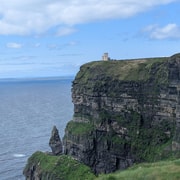
Dublin: Private Luxury Day Tour to the Cliffs of Moher
Free cancellation Booked securely via partner
Check availability & prices →
From €3 per person
A full day out of Dublin to the west coast, done privately so the day is shaped around you. The route takes you from the city across to County Galway and down through the Burren to the Cliffs of Moher - one of the most dramatic stretches of coastline in the country.
Dunguaire Castle - Your first stop, about 2.5 hours from Dublin near the village of Kinvara in County Galway. This 16th-century tower house sits on a rocky outcrop above the bay and was once associated with King Guaire of Connaught, a figure famous in Irish legend for his generosity.
Hazel Mountain Chocolate Factory - A family-run operation in the Burren, housed in a stone building that fits naturally into the limestone landscape. Worth a stop for the contrast between the scenery outside and what’s being made inside.
The Burren and the Wild Atlantic Way - The route continues along the Wild Atlantic Way through the villages of Ballyvaughan, Fanore, and Doolin, with Galway Bay and the Atlantic to one side and the limestone Burren Mountains rising on the other.
The Cliffs of Moher - The main event. You’ll have time to explore the cliffs and take in the views along this remarkable stretch of the west Clare coast.
Kinvara is worth more than a photo of the castle. Dunguaire Castle sits on a stone promontory at the edge of Kinvara Bay and catches the light like nothing else on this coast - but the village behind it has its own life. Kinvara is a working harbour village with four pubs and a trad music scene that runs most nights of the week. Winkle’s pub is the one to know - sessions are real, played by locals who want to play rather than performed for tourists. If there’s time before or after the castle stop, walk the pier at the end of the village when the light is on the bay.
Ballyvaughan is the Burren’s front door. The village is small - a crossroads, a pier, a square - but it’s the best base for the limestone landscape rising behind it. If the tour slows down here, Ballyvaughan is the place to spend the extra time. Monk’s Pub at the pier does a seafood chowder that belongs on a short list of the best things to eat on the Wild Atlantic Way: mussels, salmon, brown bread, and a window seat looking at the bay. O’Loclainn’s Whiskey Bar nearby is tiny, run by the same family for seven generations, and stocks bottles from distilleries that closed in the 1970s - it opens when it opens.
The road through Fanore is one of the best drives on this coast. The R477 north from Ballyvaughan to Fanore runs between the limestone Burren pavement dropping to the sea and Galway Bay opening out to the north. Fanore itself is barely a village - under 200 people, one pub - but the beach here is a geological oddity: a long sandy strand sitting between limestone karst on all sides, which is not meant to happen. Stop for ten minutes and look east at the Burren running off into the distance.
At Doolin, the walk south beats the visitor centre. Doolin is the last village before the Cliffs of Moher, and the cliff walk south from the harbour to Hag’s Head delivers you to the same cliff edge as the visitor centre - with no car park, no turnstile, and the wind doing all the talking. If there’s time in the day, this is the version of the cliffs that stays with you. Gus O’Connor’s pub in Doolin has been pouring since 1832 and does a solid chowder. Sessions go from around 9pm.
The Cliffs of Moher face west. The best light is in the afternoon and evening, not the morning. If the itinerary can be shaped to hit the cliffs on the way back rather than on the way out, the light and the atmosphere are both stronger.