← All Wicklow tours via partner · From €7 · 9 hours 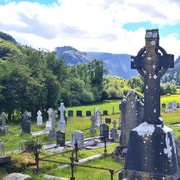
Private Tour - Co. Wicklow, Glendalough & Powerscourt Estate
Free cancellation Booked securely via partner
Check availability & prices →
From €7 per person
Your guide meets you at your hotel in the morning for a short tour of Dublin city before heading south into Co. Wicklow - a county that earns its reputation as the Garden of Ireland. The landscape shifts quickly once you leave the city: agriculture farms, rolling hills, and the sweeping countryside that forms part of Wicklow National Park. Along the way you’ll spot various breeds of cattle and sheep, and the grains and crops the land is well-suited to growing.
The first major stop is Glendalough, where the monastic city was founded by Saint Kevin in the 6th century. You’ll start at the visitor centre to get a feel for the history, then walk in through the stone arch that served as the entrance for pilgrims and monks for centuries. The church ruins stand today surrounded by a large graveyard of headstones, tombs, and Celtic crosses - quiet and affecting in equal measure. There’s time to walk the wooded pathways through the valley and take in the lake with its hills of trees on all sides.
Lunch is in a traditional Irish pub, with a menu that includes beef and Guinness stew, fish and chips, and chicken or beef with potatoes and vegetables.
The afternoon takes you through the Wicklow Mountains, with stops at some of the most scenic viewpoints in the county - plenty of time for photos. The day ends at Powerscourt Gardens on the private Slazenger family estate. These gardens have been voted number one in Ireland and number three in the world. They’re divided into distinct sections - Italian, Japanese, Rose, and Walled Garden, among others - each with its own character.
Glendalough itself is a monastic site at the bottom of a glacial valley - the actual village is Laragh, about 1.5 km east, where the pubs and restaurants live. If your lunch stop is in Laragh, Lynham’s of Laragh has been the village pub for generations and does a solid plate after a morning in the ruins. Trinity Mountain Bothy, also in Laragh, is a smaller daytime café that does soup, good coffee, and big slabs of cake - it knows it’s feeding walkers and behaves accordingly. Laragh is also where three mountain roads meet: the Military Road from the Sally Gap, the R755 to Rathdrum, and the R756 into the valley.
At Glendalough, ask your guide about the round tower’s doorway - it sits three and a half metres above the ground, which is not decorative. The monks pulled the ladder up when Vikings came up the valley looking for monastery silver. It worked some of the time. The walk from the visitor centre along the Lower Lake to the Upper Lake takes about 25 minutes on a flat path, and the Upper Lake is noticeably quieter.
Powerscourt is in Enniskerry, and the village square there is worth five minutes if you get any time on either side of the gardens. The Powerscourt Waterfall - Ireland’s highest continuous-flow fall, at 121 metres - is a short drive from the main estate and a separate stop worth knowing about, though it may not be on this day’s route. The gardens themselves are 47 acres and were ranked third in the world by National Geographic, behind Versailles and Kew.
The Wicklow Mountains are best lit in the morning or late afternoon. The drive back to Dublin over the Sally Gap on the military road - if your guide takes that route - is one of the finest stretches of upland road in Ireland.